2024 - 2026
Established the design foundation to align product, brand, and business
Staking Rewards was shifting from a staking explorer to a staking platform when I joined to design the Stake App. In parallel to product delivery, we defined the design direction, started the Design System from scratch, and rebuilt the entire marketing ecosystem.
As the platform scaled, supporting multiple token flows with different constraints increased product and operational complexity, making the model unsustainable and leading to a company spin-off.
From that point on, as the sole designer for Staking Rewards, I redefined the design direction again for a marketing-driven, rating-focused company and led the creation of the new VSP experience, the conversion-focused website, and the Journal as an authority and growth channel.
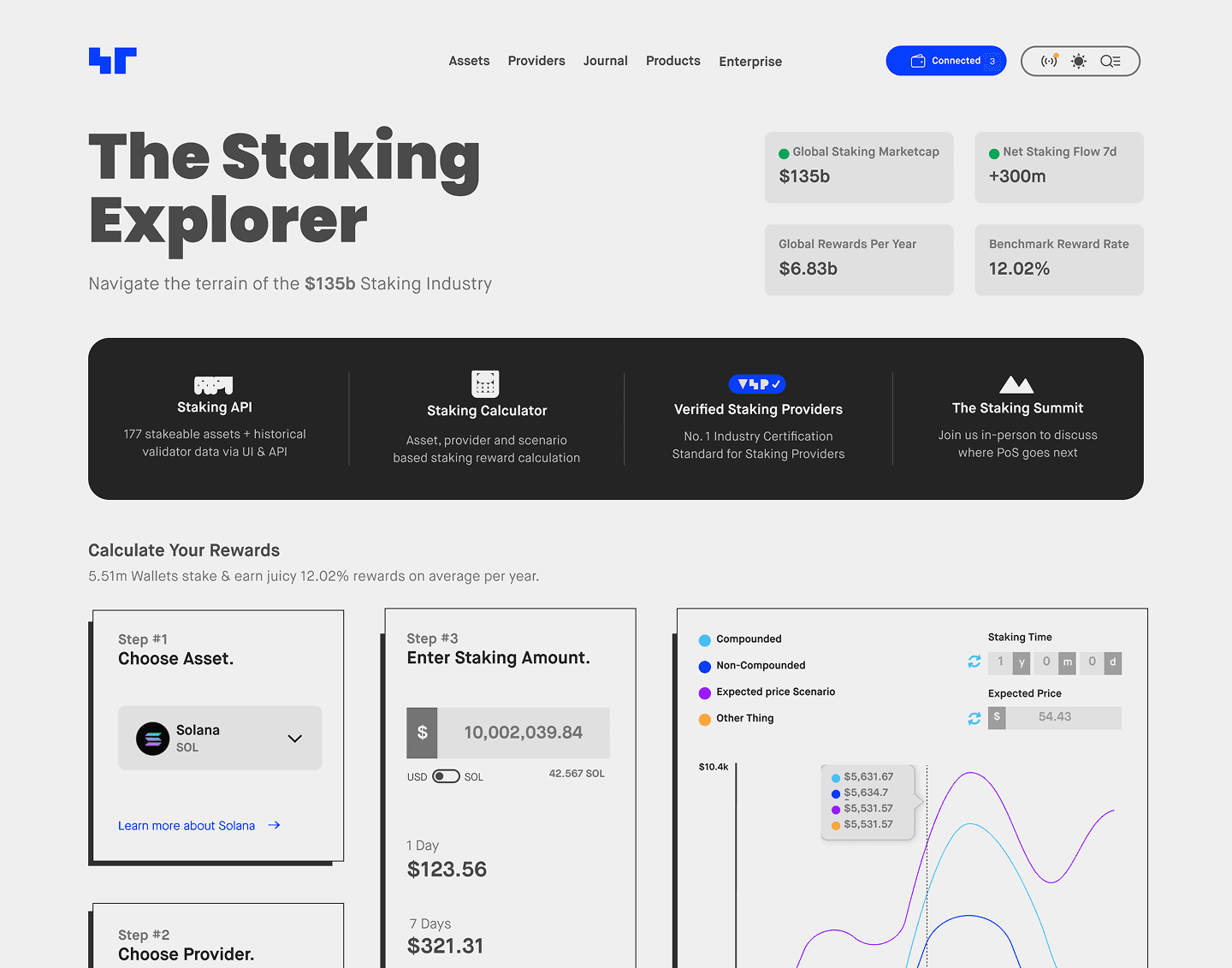
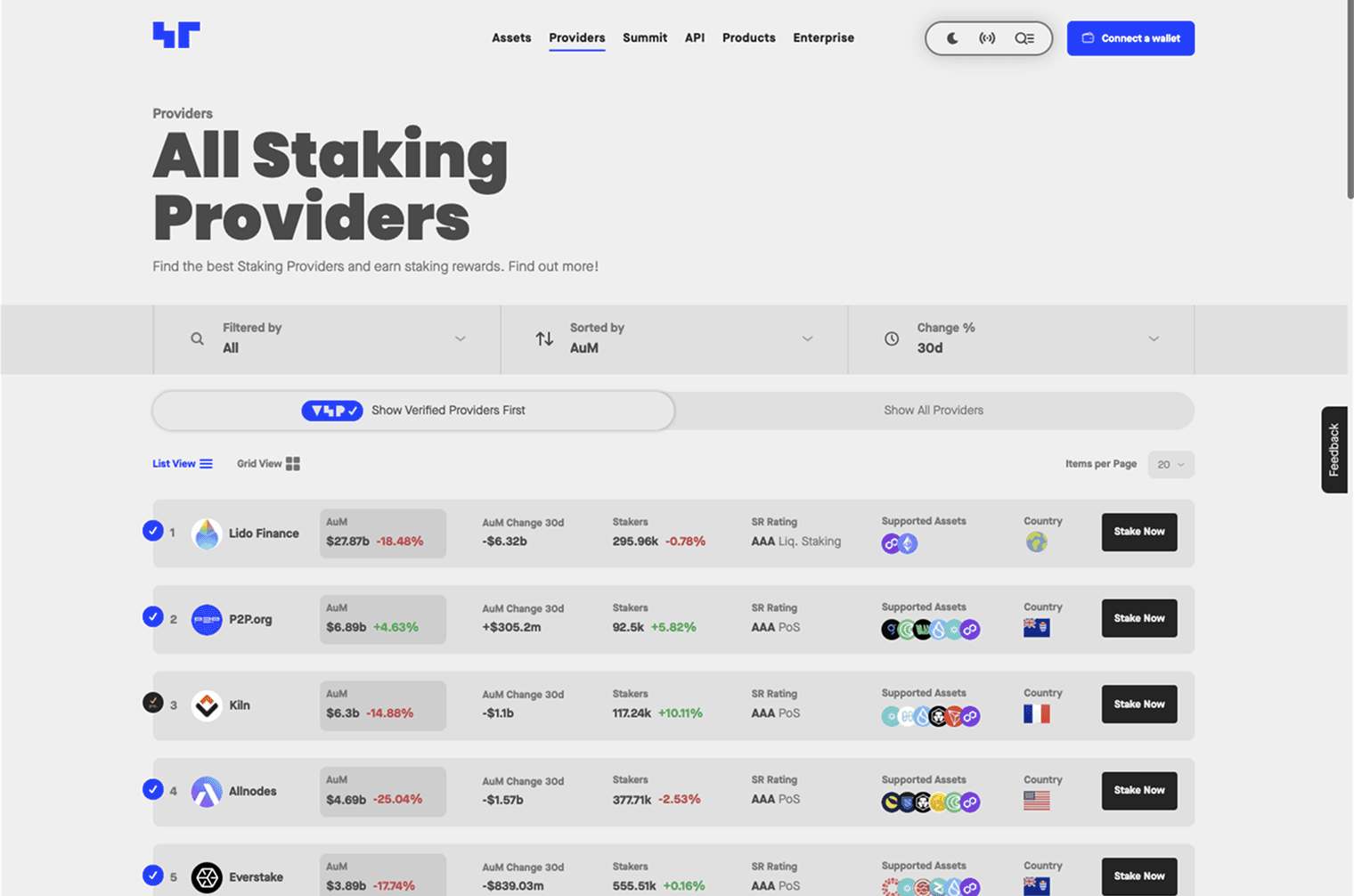
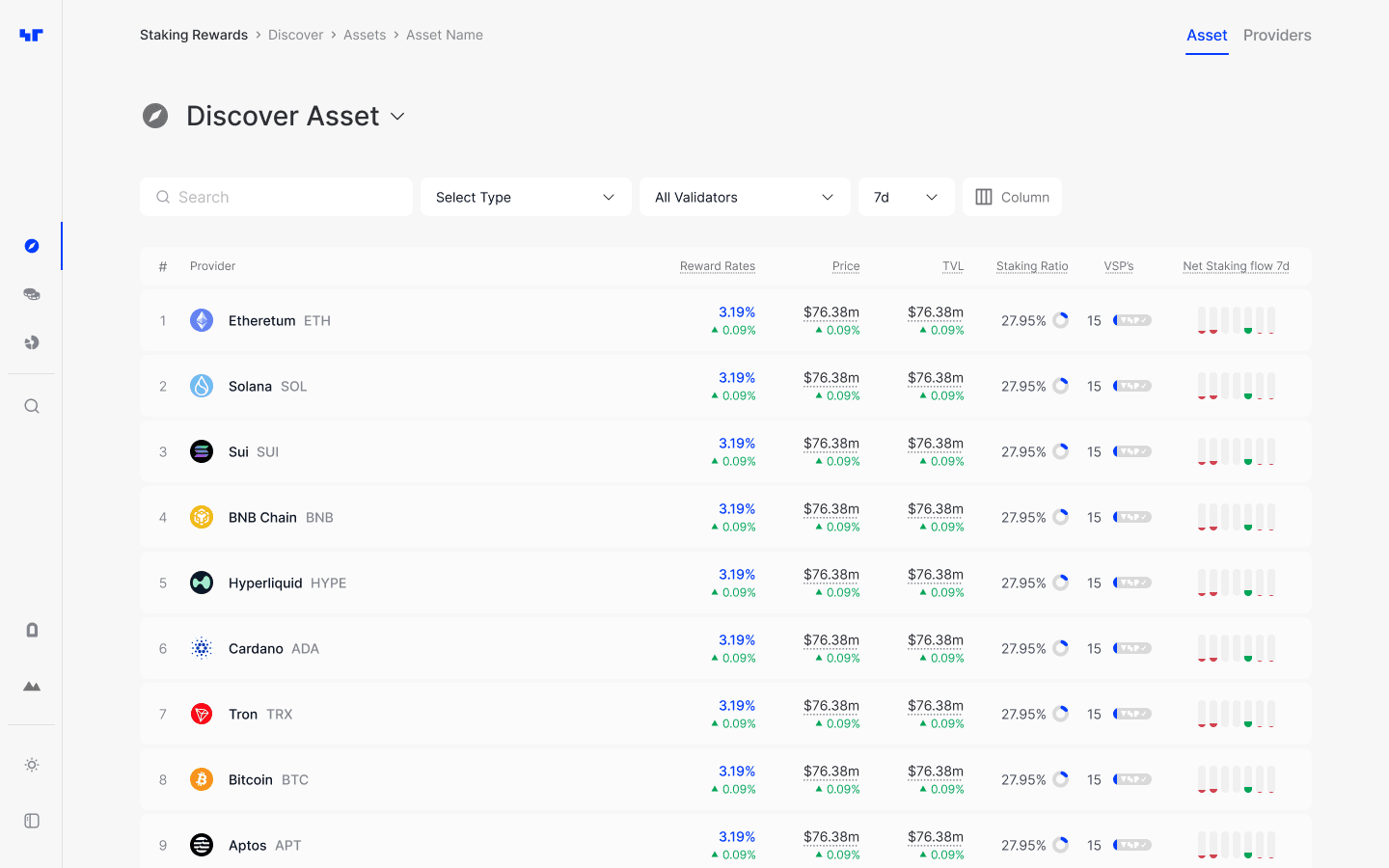
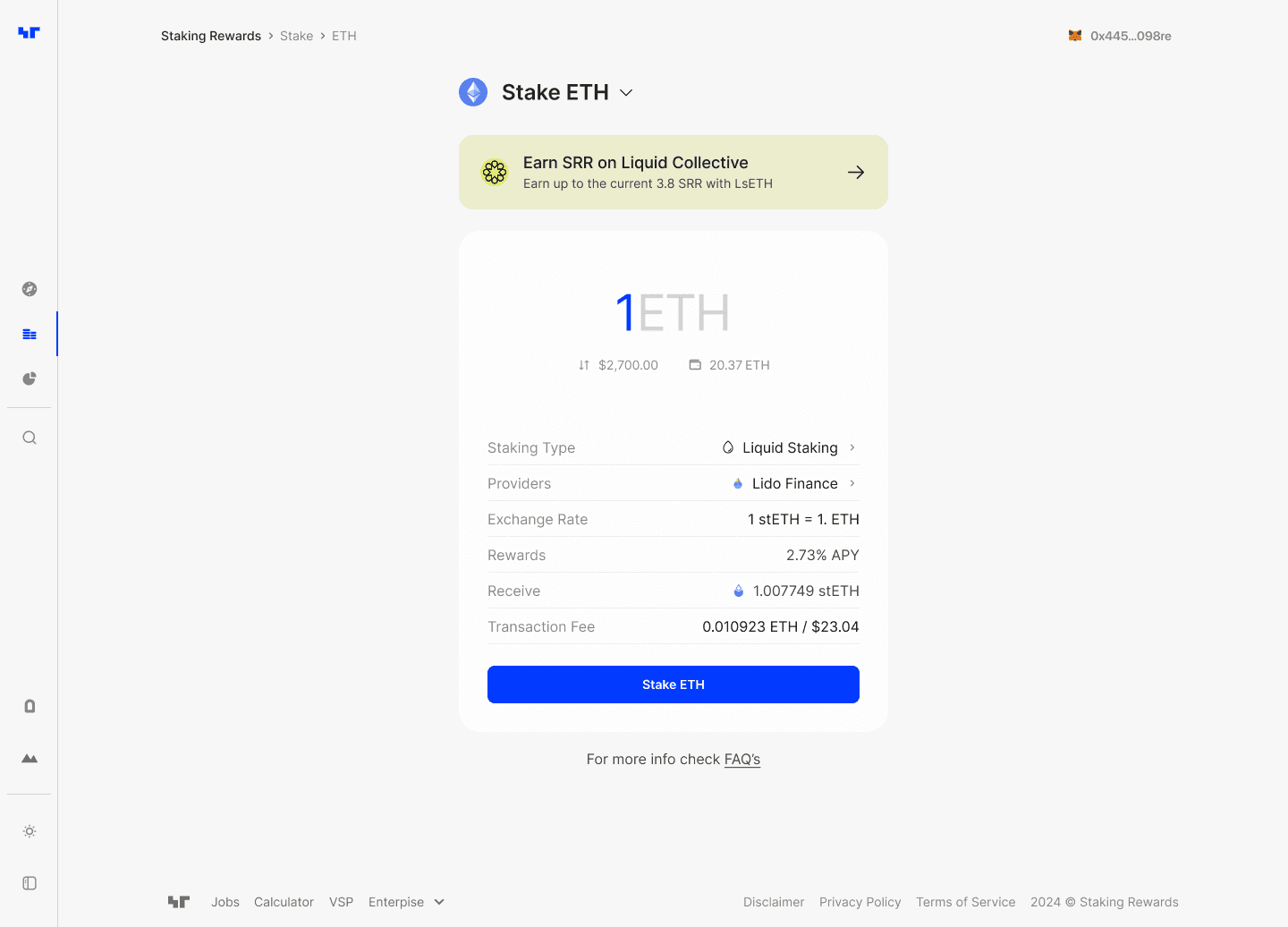
Aligned the product experience with the new company’s core value proposition.
The platform was originally optimized for data exploration.
We redefined it around a single goal: helping users confidently stake and earn. This shifted the interface to a unified decision journey and from asset discovery to provider selection and reward simulation.
As a result, product development became focused, feature prioritization clearer, and the experience consistent across all staking flows.
Built a unified design system reducing time-to-market and design tech debt.
Starting from a single fragmented file with legacy components and no variables, I helped establish a production-ready library with tokens, reusable components, and page-level structures.
This enabled consistent implementation across product and marketing, reduced rework, and cut the time required to ship new initiatives by half.
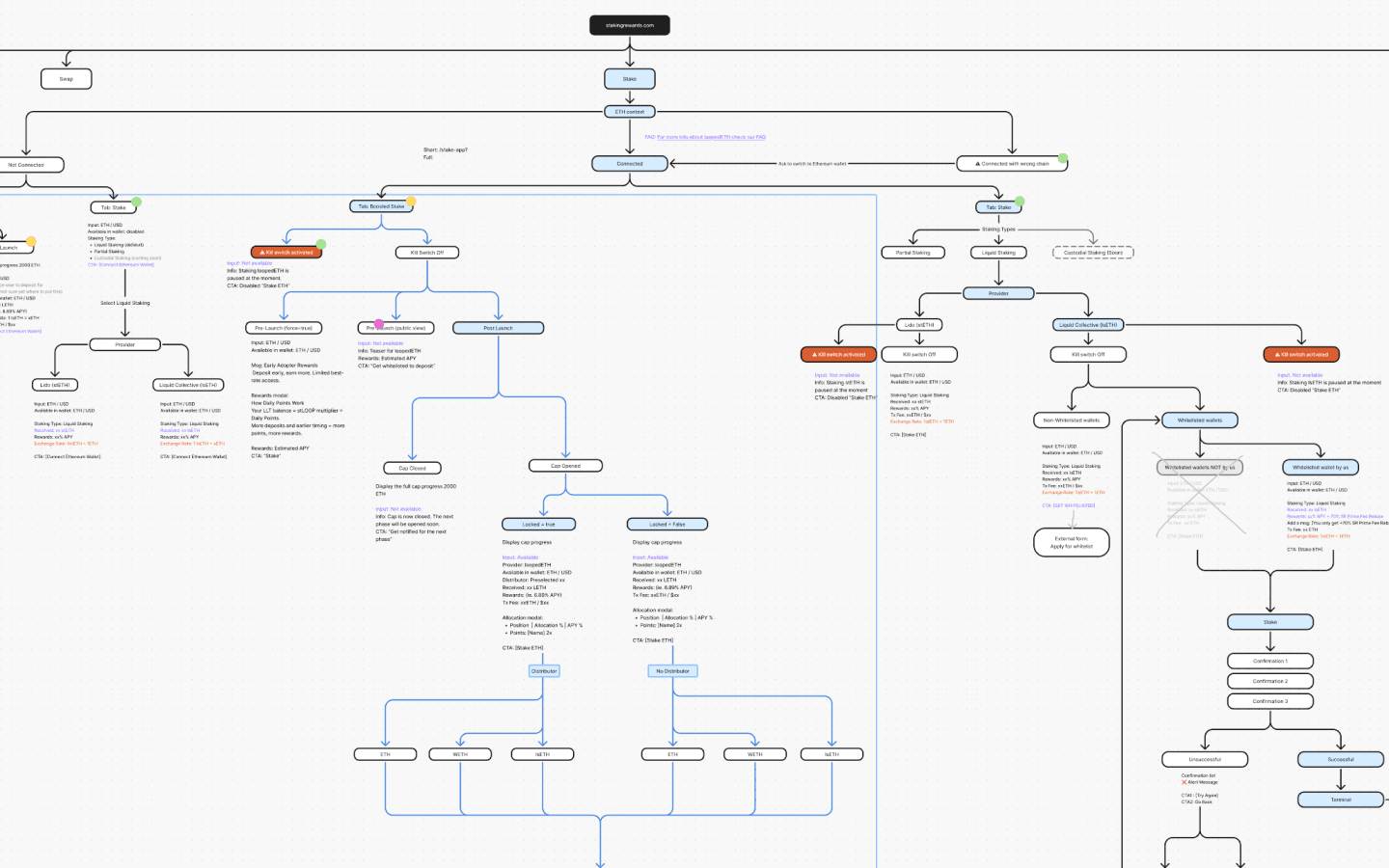
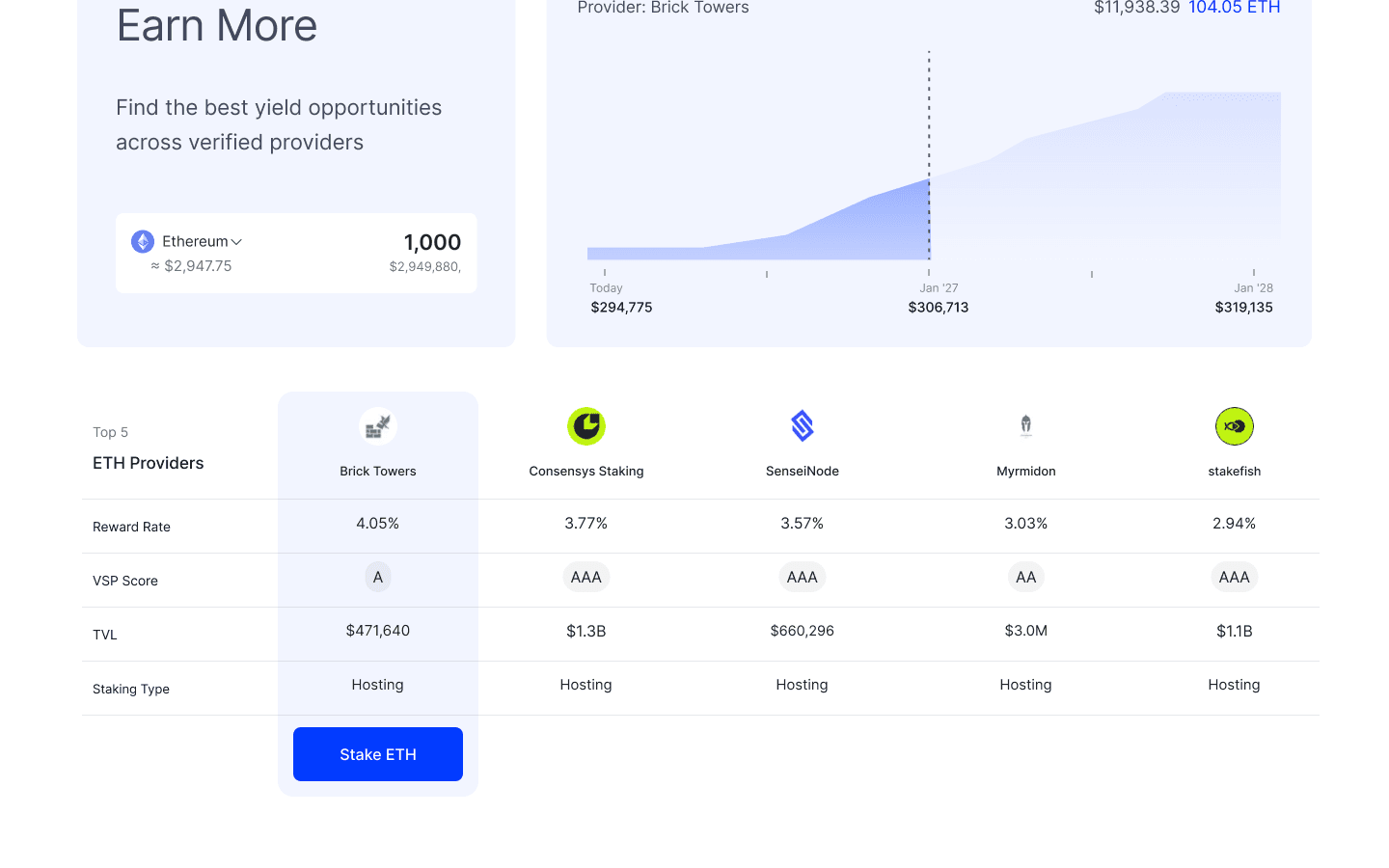
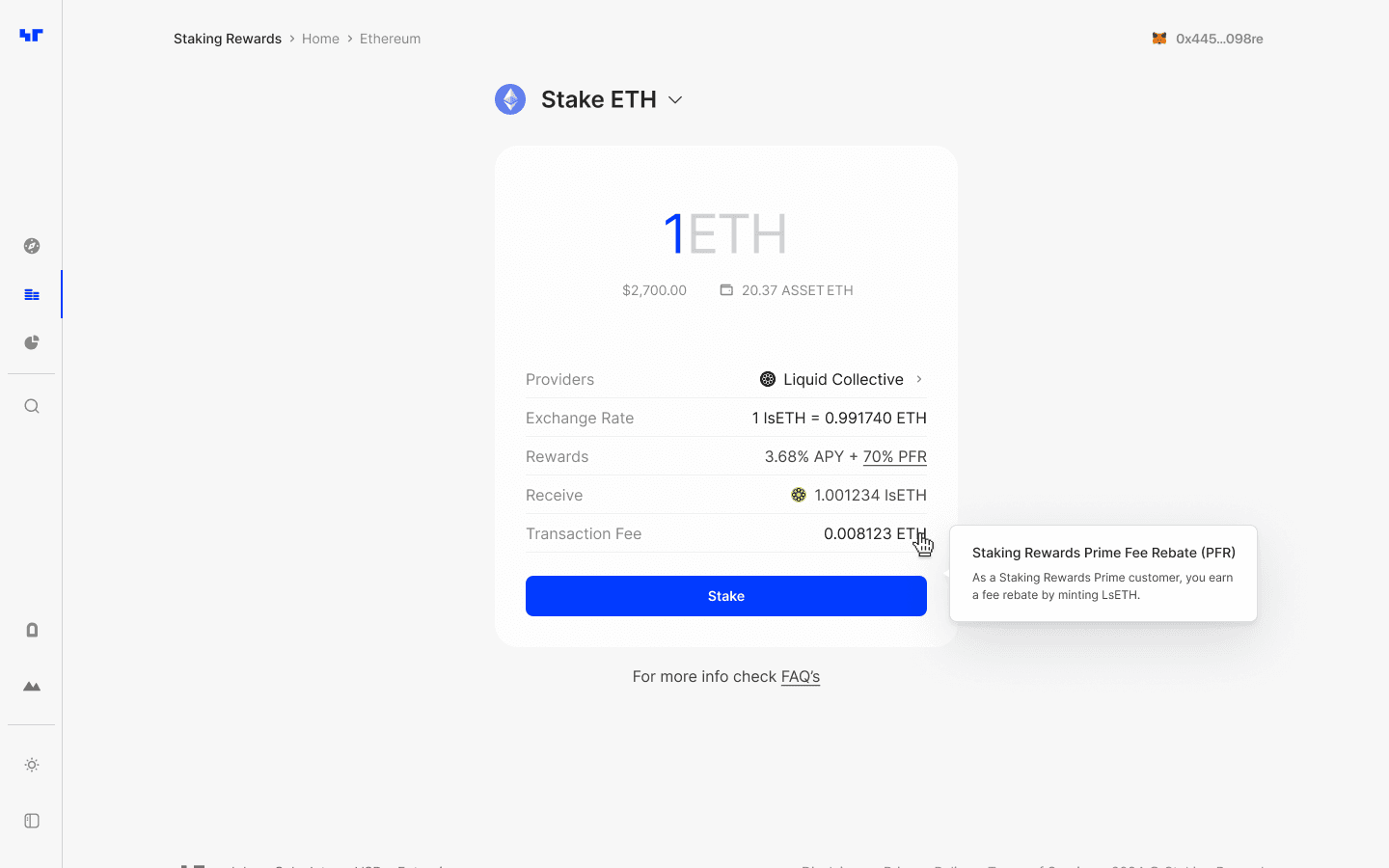
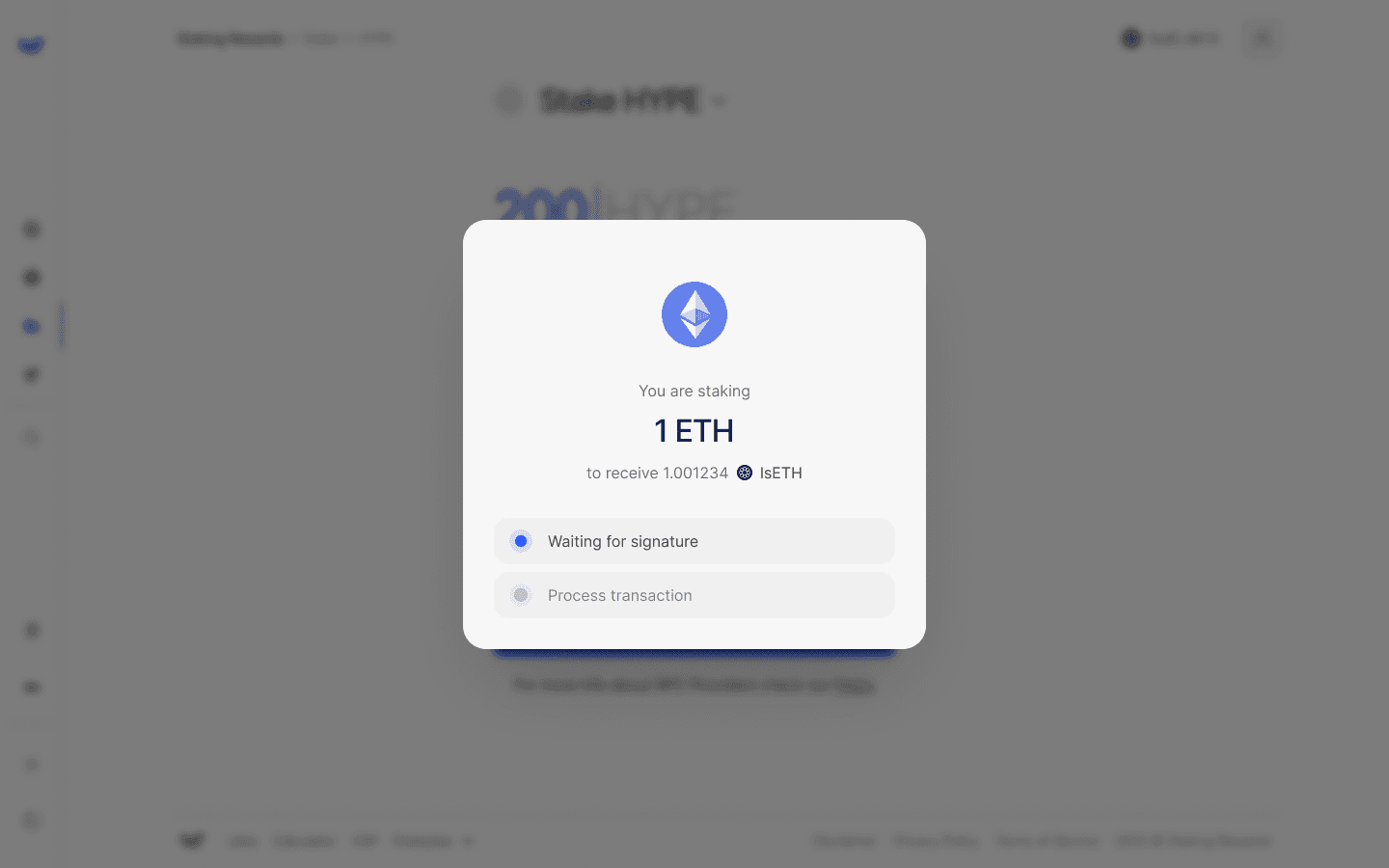
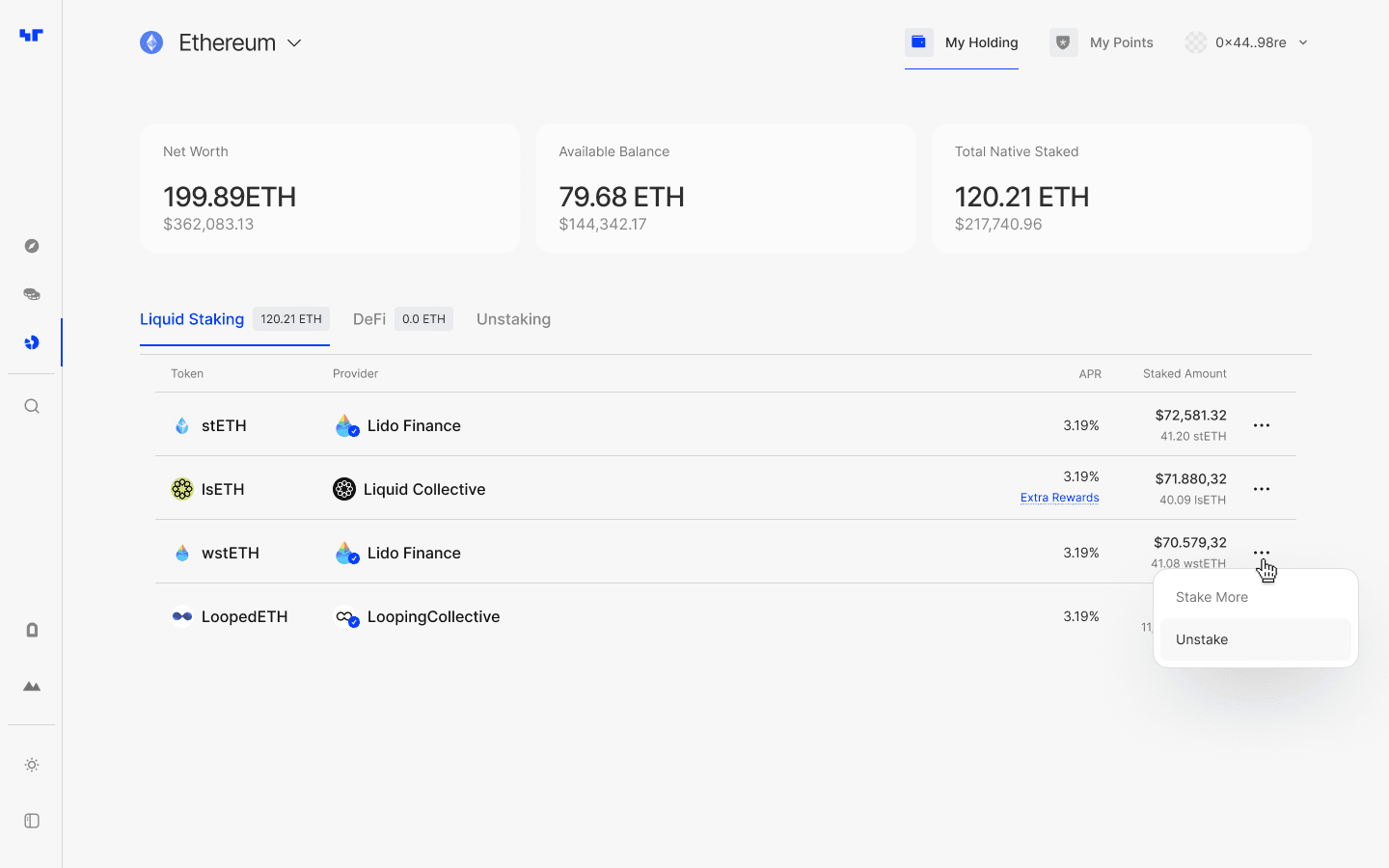
Redesigned the user journey to enhance discovery, context, and persistency.
I restructured the information architecture and introduced a contextual navigation model that connected assets, providers, and actions across the platform.
This reduced dead clicks by 37%, increased qualified stake leads by 15%, and created a persistent orientation layer for both product and marketing journeys.
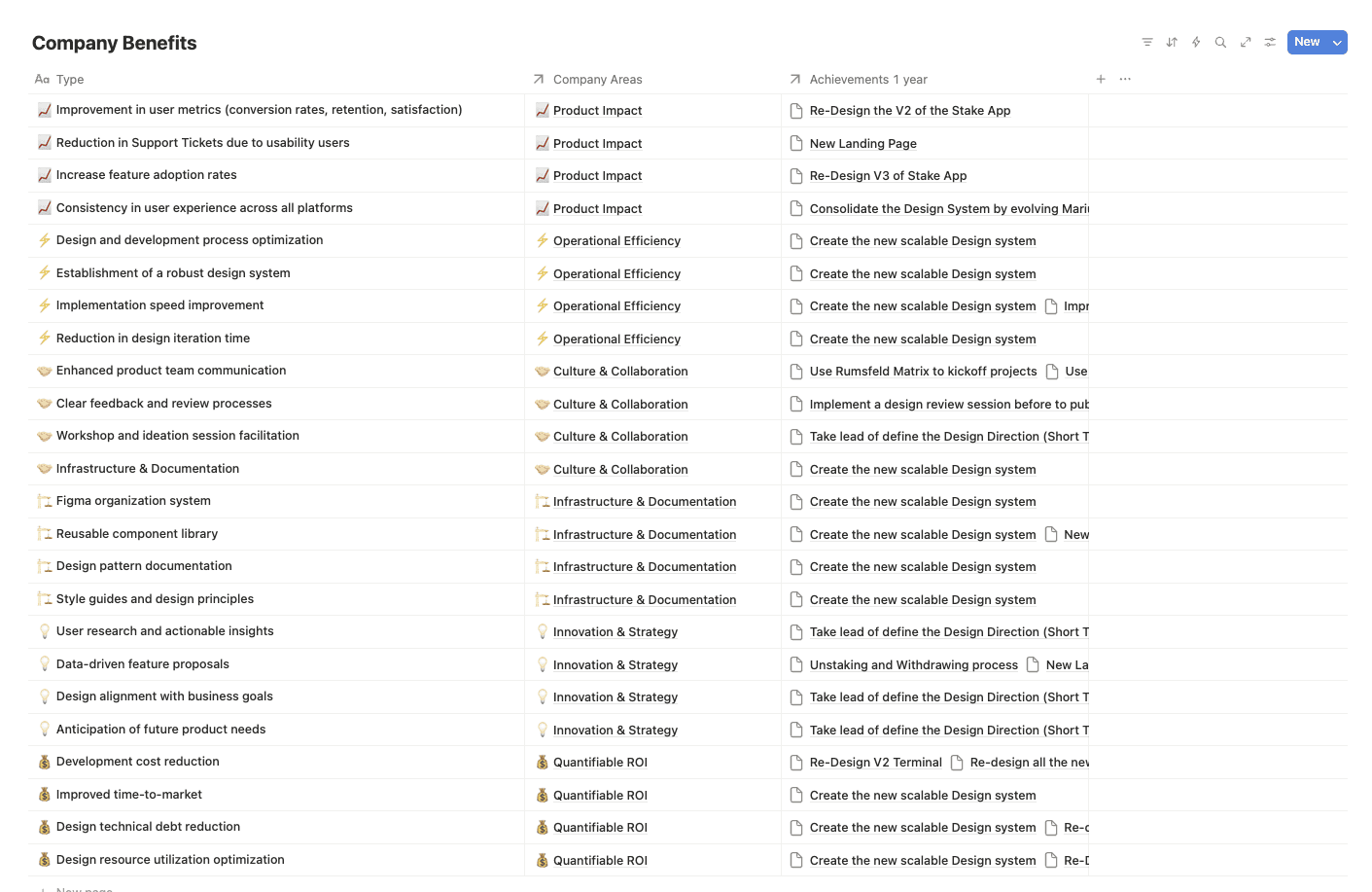
Partnered with C-level to connect design decisions to measurable business ROI.
I mapped every major initiative to its impact across product, operations, collaboration, infrastructure, and quantifiable ROI, turning design outcomes into company-level performance indicators.
This framework made improvements in time-to-market, resource utilization, implementation speed, and technical debt visible, enabling leadership to evaluate design as a business function rather than a delivery role.
🏆 Learnings
Designing for anonymous wallets forced me to rely on behavioral data and company-level metrics as proxies for user feedback. That constraint shaped my approach to outcome-driven design and ROI visibility.
Systems enable speed in high-uncertainty environments
Building the design system in parallel to shipping proved that operational infrastructure is what allows teams to adapt, pivot, and continue delivering without losing coherence.
Business alignment is the real product strategy
The most valuable work was not shipping interfaces but connecting design decisions to sustainable revenue streams and measurable company performance.